Category Archives: Artwork

Wolfendale Prize

I have been interested in the human urge to depict the world around us at least since a visit to Lascaux caves in France in 1976. This huge instalation, made around 50,000 years ago, demonstrates (to me) an urge that Prof Dennis Dutton (a former Prof. Aesthetics from new Zealand)  described very eloquently as an instinct with Pliestocene origins. From it he has traced a quite plausable evolutionary development to the present day.

I began exploring the ideas around this because I find the idea of irregularities in rock walls as seen in firelight leading to recognition of a the clues found in nature that are used by hunter gatherers to0 detect quarry species and danger very convincing. Much of this was reinforced by  time spent in Tsavo National Park with a Masai bush guide.

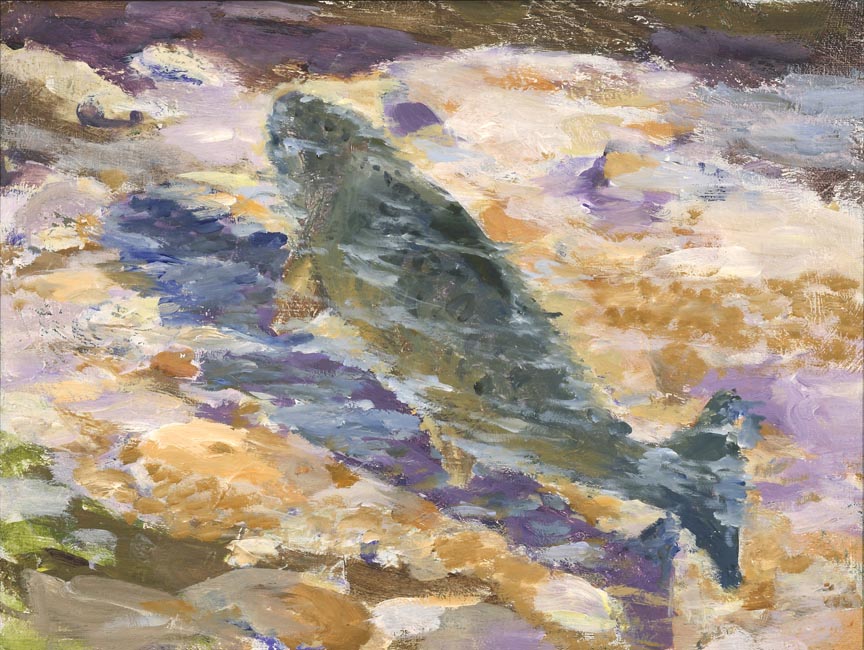
This is a piece of work I did following through the exploration, for which I became the joint 2012 winner of the Sir Arnold Wolfendale Prize for Art in Science and Nature.  It is created like a bas relief that can be fitted flush with a wall and which evokes the idea of a cave wall.

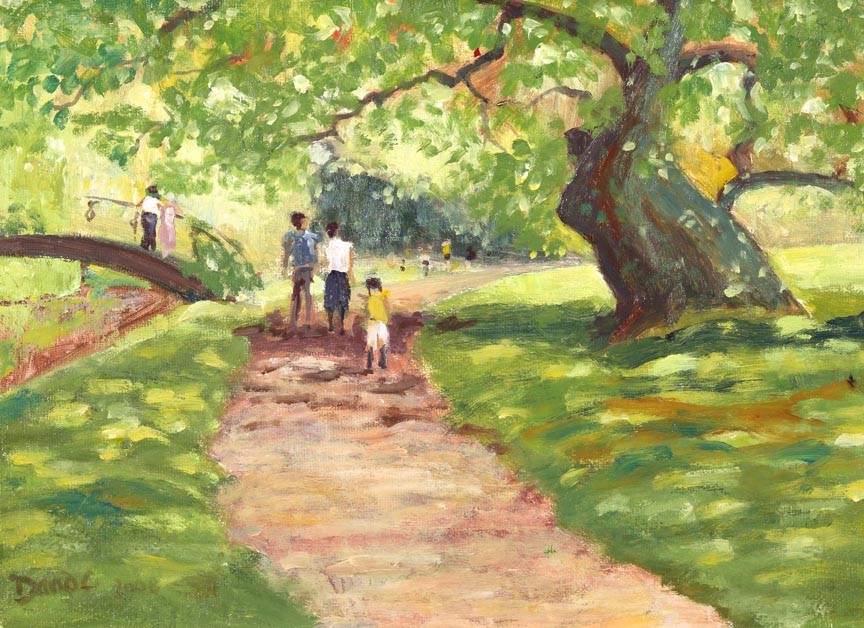
Some oil paintings evoking the landscape

I have always tried to paint  landscape in oil, often populated by birds or animals and more recently, with people. Here are a few of my efforts to date, the last one of which I completed this morning.

Painting birds and wildlife

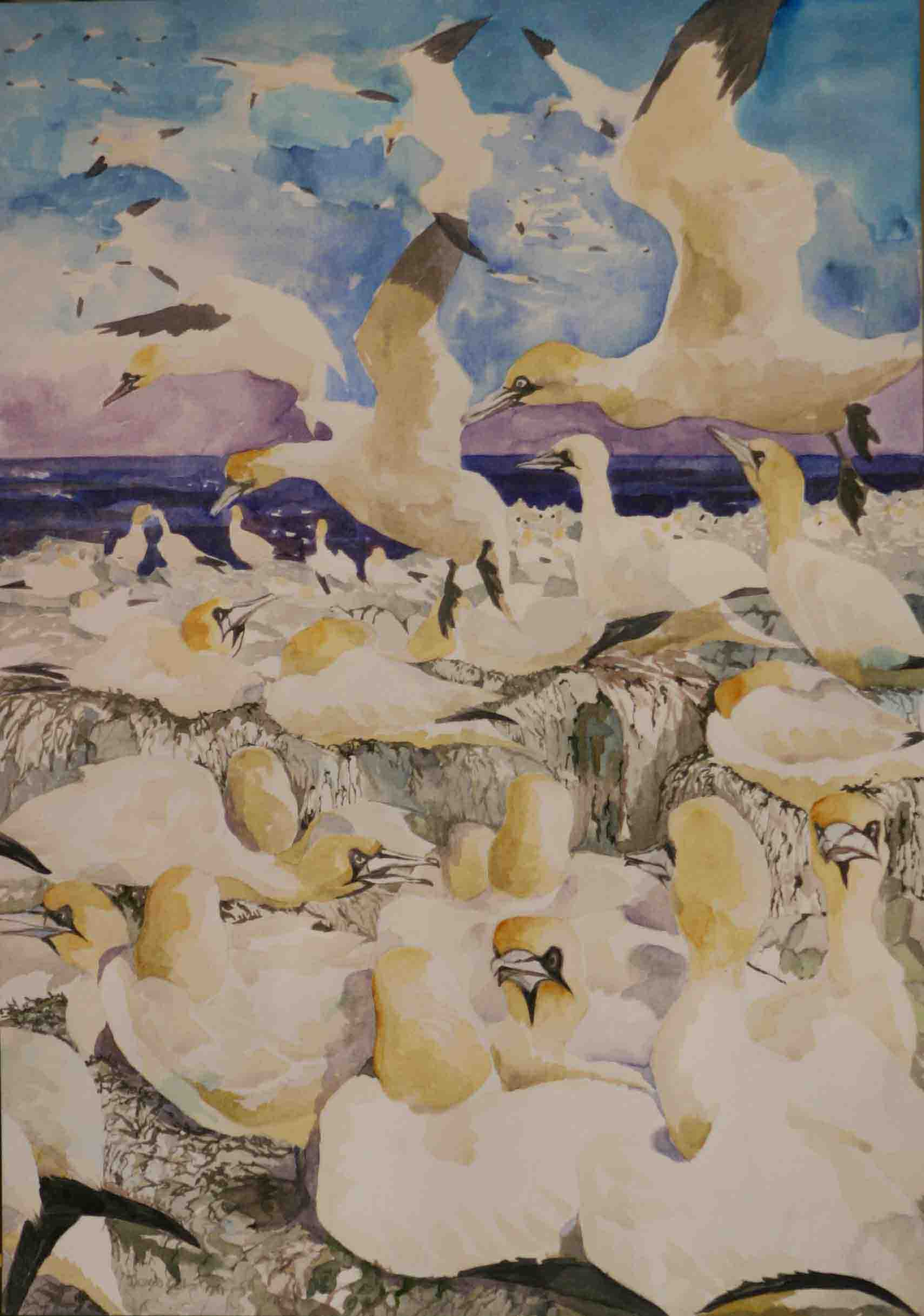
A great artist who inspired me to do better wildlife based art is called John Busby, who is an Academician of the Scottish Royal Academy. I, along with a large number of other artists, have benefitted from his courses in Scotland where support has been available from several of the people he has mentored over about 30 years. Here is one piece of work which i did last year as a result of one of the visits he organised to the Bass Rock in the Firth of the Forth.

Drawings

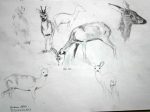
I have always drawn in a scetchbook. Mostly the subjects have been from nature, usually birds, occasionally animals. I have always tried to learn to memorise what I see down a telescope and to hone up the drawings when I am sitting down properly. Often, sketching of this sort can be very uncomfortable. Observation is a multi-stage process of learning.  Here are a couple of examples.